
Pope Leo, the newly elected pontiff and the first pope from USA to lead the Catholic Church, has sparked a friendly debate among Chicagoland residents. Some say he’s from Chicago. Others claim he’s from Dolton, a suburb just south of the city. So which is it?
Technically, both. But I say: he’s a Chicagoan.
Why Pope Leo deserves the “Chicagoan” title
1. Close enough
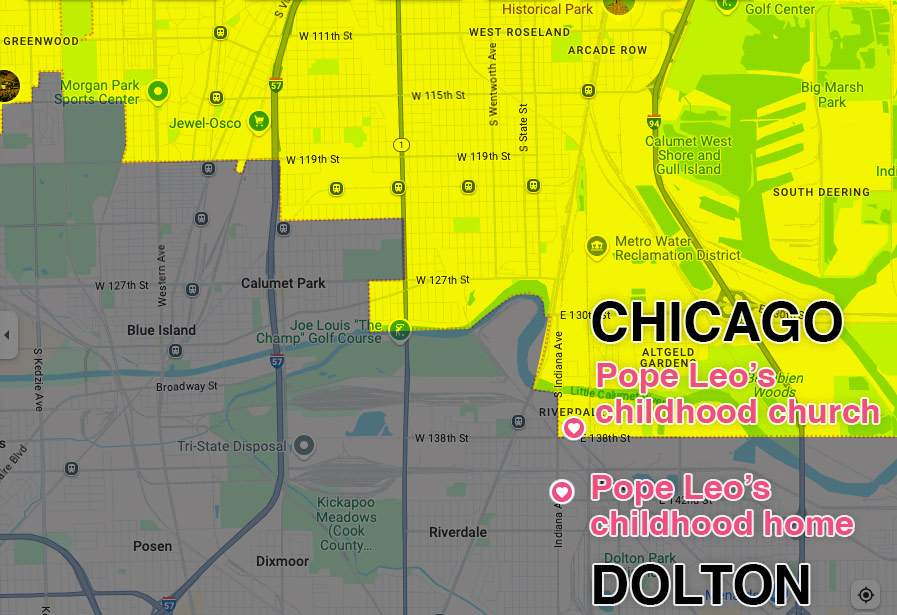
His childhood home at 212 E 141st Pl, Dolton, IL 60419 is technically in Dolton. However, he’s just four blocks south of the Chicago border.
People who grew up in within the city limits of Chicago are very particular about who can call themselves a Chicagoan. People from the suburbs try to say they are from Chicago. “Fuggedaboudit, you ain’t from Chicago. You are from da burbs.” Naperville is not Chicago. Completely different vibe.
If your house is four blocks from the border, c’mon. Really. I grew up in the city myself, and even I say: that’s close enough.
2. Dolton doesn’t feel like a typical suburb
Drive around Dolton near where Pope Leo grew up, and it doesn’t feel like a typical leafy suburb. You’ll find train tracks, train yards, and the hum of freight traffic—more industrial belt than suburbia.
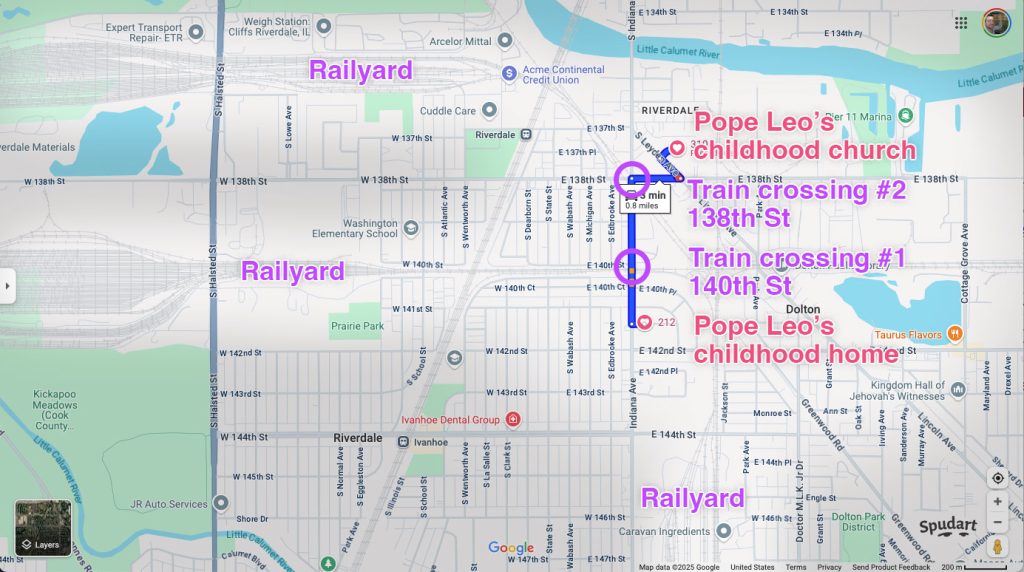
His walk to church was only six blocks, but he had to cross busy rail lines to get there. The industrial character of this area shares more with Chicago’s working-class neighborhoods than with what most people imagine when they think “suburb.”
3. His church and school were in Chicago
Here’s the clincher: his childhood church—St. Mary of the Assumption Church—is actually inside Chicago city limits. It sits in a southeastern corner where the border dips to 138th Street.
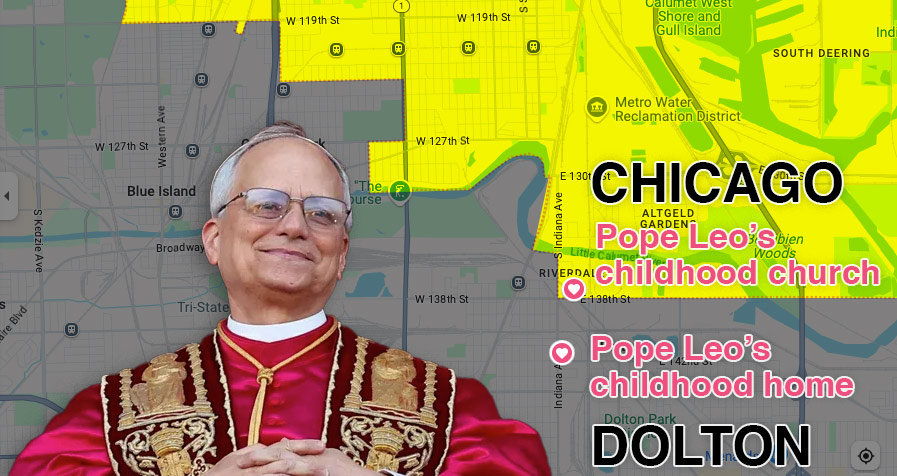
I grew up in the Beverly neighborhood Chicago, the city ended at 119th—at least in our minds. But go further east, and you’ll find that the city drops down to 138th to include St. Mary of the Assumption.”
His church sits in that corner of the city where the border extends to 138th Street—in the Chicago neighborhood of Riverdale—not to be confused with the adjacent suburb by the same name.
So while he lived in Dolton, Pope Leo’s spiritual upbringing—church and parochial school—was rooted in Chicago.
So… Is Pope Leo a Chicagoan?
He grew up in Dolton, sure. But he spent a lot of time in Chicago. His church. His school. His spiritual roots.
And when you’re just four blocks from the city—and living a life defined by its railways, its rhythms, and its border quirks—I’d say that counts.
Call him a Chicagoan.
Pope Leo growing up by railyards
What was Pope Leo’s day-to-day life like growing up in Dolton and attending church in Chicago? It was shaped by trains—lots of them.
His childhood home was just 0.8 miles from his church (a 17-minute walk or 3-minute drive). However, this short journey required crossing two sets of railroad tracks at 140th and 138th Streets.
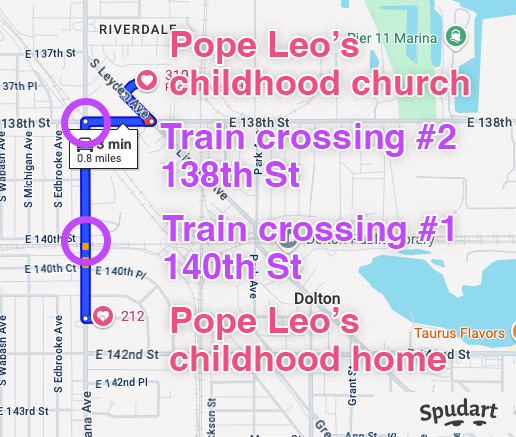
These weren’t just any train crossings. They were active freight lines beside busy railyards, which meant slow-moving trains could block crossings for extended periods. When that happened, his family had options:
If the 140th Street crossing was blocked, they’d need to detour to Halsted (1.4 miles west), turning a 3-minute trip into a 10-minute journey.
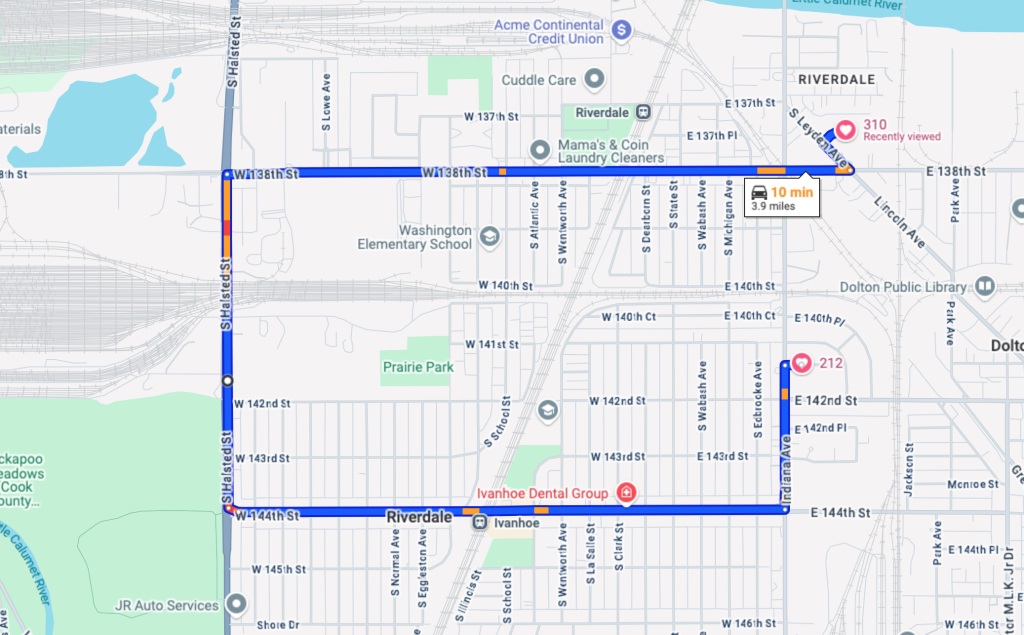
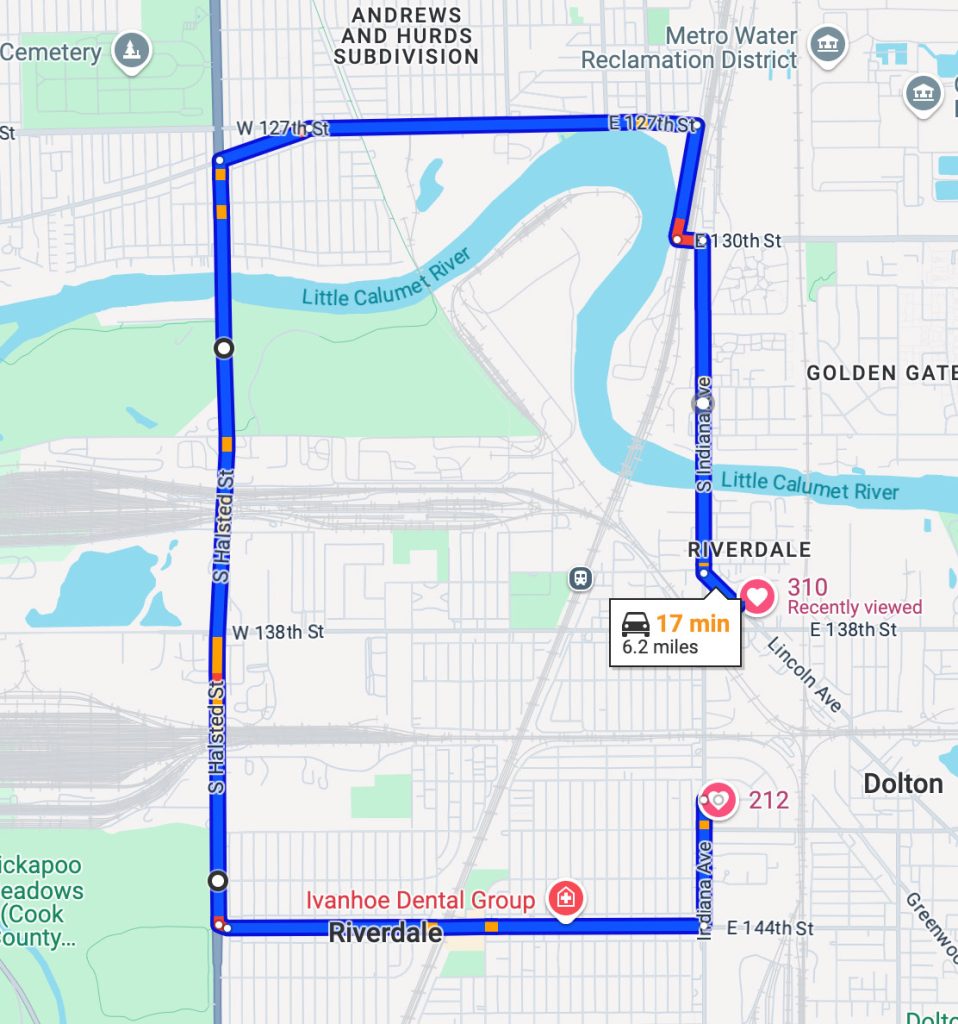
If 138th was blocked, they’d have to take Halsted all the way up to 127th Street—extending the trip to 16 minutes.
The growing rail presence
The railyards that defined Pope Leo’s neighborhood were bustling hubs. This map shows rail traffic in 1971, when Pope Leo was 16 years old:
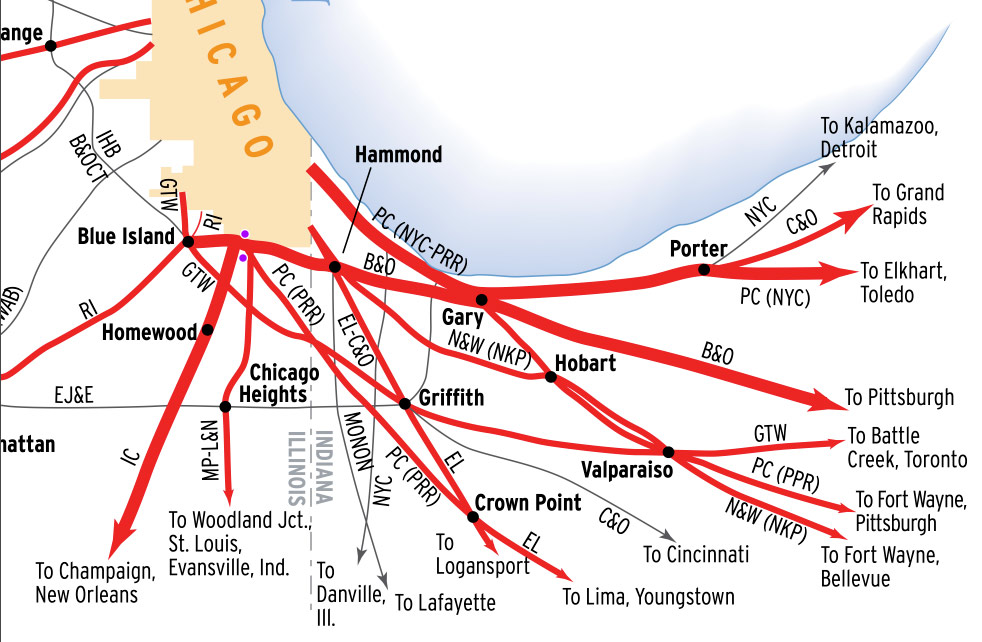
His church (north of the B&O line) and home (just south of it) were nestled in a web of rail lines. (On this map I marked very faintly Pope Leo’s church and home with purple dots. They are right by the B&O line that goes to Pittsburgh.) By 2000, these freight corridors had grown even busier.
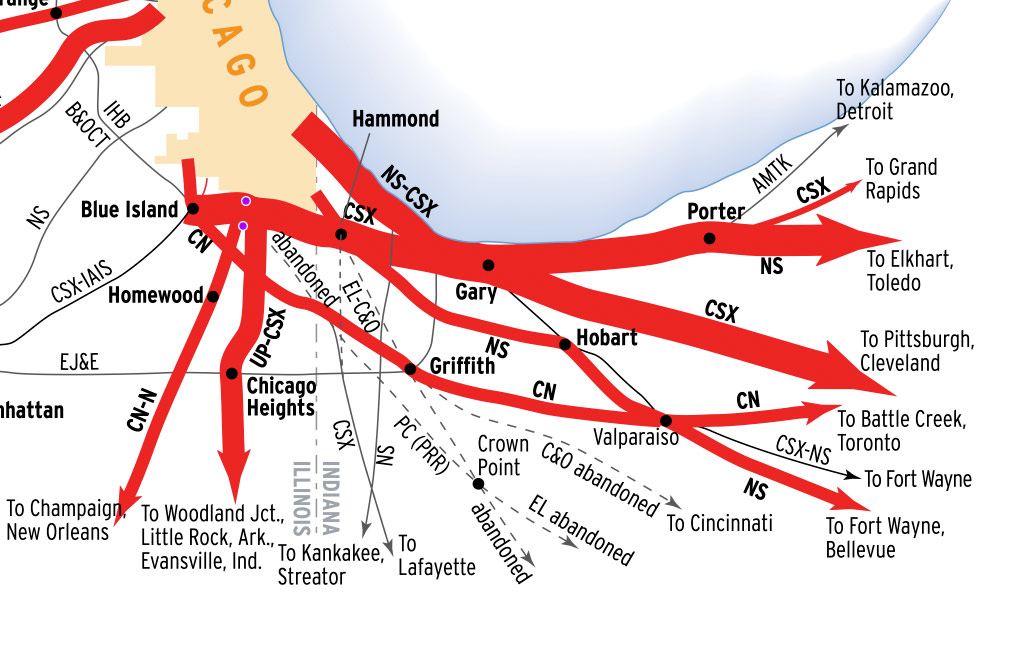
Though Pope Leo had moved on by 2000, this growth demonstrates that trains were a thriving, increasing presence throughout his formative years—perhaps even contributing to the eventual closure of his childhood church and school. The amount of train traffic might have made it unbearable for people to live nearby. Or at the very least, making it impossible to arrive at church on time!
This railway-defined childhood reflects a quintessentially Chicago experience. The city was built on railroads, and Pope Leo’s daily navigation of these industrial corridors connects him to Chicago’s identity as a transportation hub and working-class city.
It’s one more reason why, despite the municipal boundary, Pope Leo deserves to be called a Chicagoan—not just because of geography, but because his life embodied the authentic Chicago experience. He may have slept in Dolton, but his soul walked in Chicago.